


What is EPS?
EPS is the international abbreviation for expanded polystyrene under DIN ISO 1043/78. In Brazil, the material is commonly known as Isopor®, a registered trademark of Knauf Isopor Ltda. The name is used commercially for the expanded polystyrene products manufactured by the company.
EPS is a rigid cellular plastic produced by polymerizing styrene in water. Its production process does not use CFC gas or any of its substitutes. Pentane is used as the expansion agent, a hydrocarbon that breaks down rapidly through a photochemical reaction caused by sunlight without harming the environment. EPS is not biodegradable, but it is 100% reusable and recyclable and can be converted back into raw material.
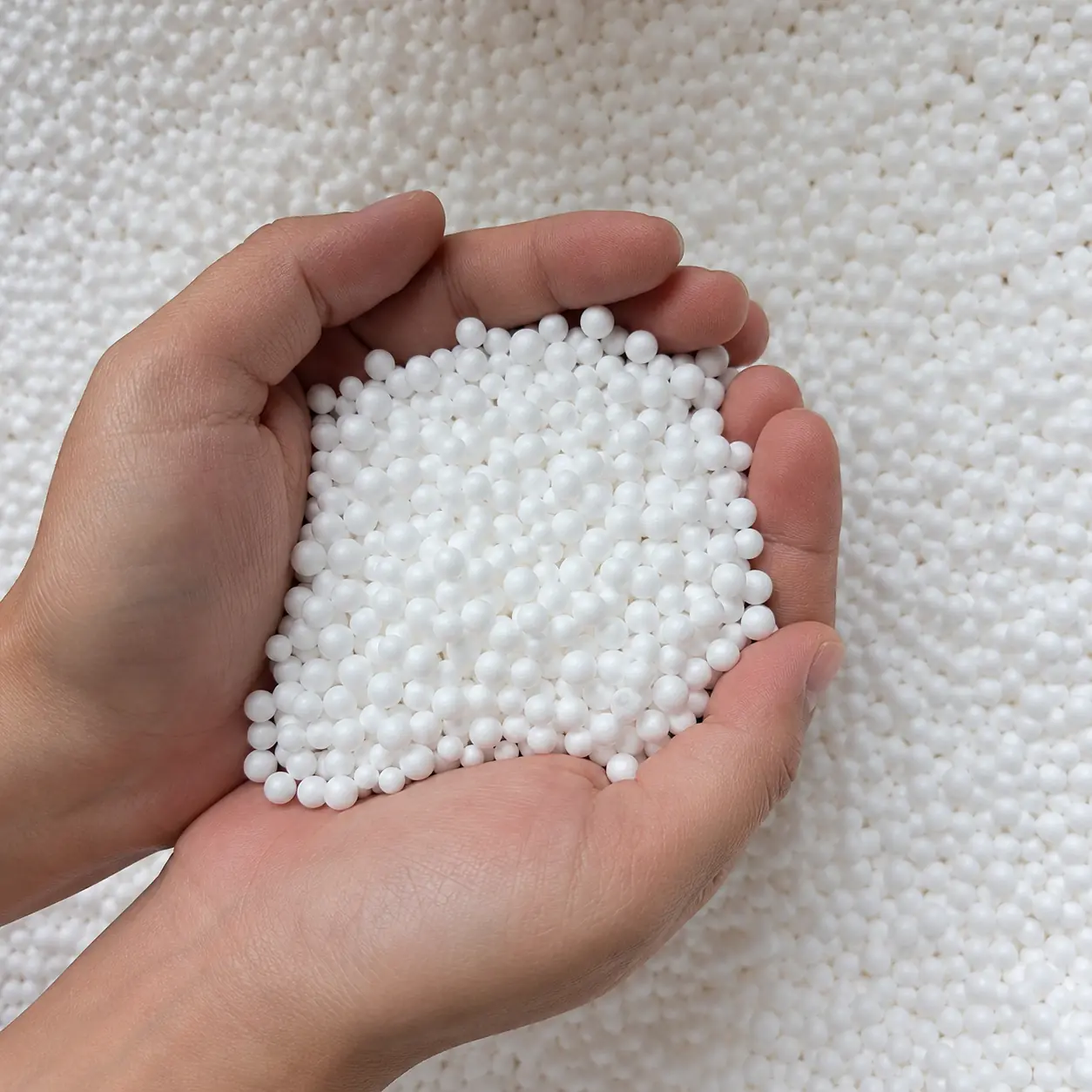
The resulting raw material consists of beads up to 3 millimeters in diameter, which can be steam-molded into many shapes. Once expanded, these beads may contain up to 98% air and only 2% polystyrene. They are odorless and do not contaminate soil, water, or air.
EPS has many applications in industrial packaging, consumer products such as coolers, boards, and ice containers, and even agriculture. However, it is most widely used in construction.
Advantages of EPS
The main advantages of using EPS in slabs include:
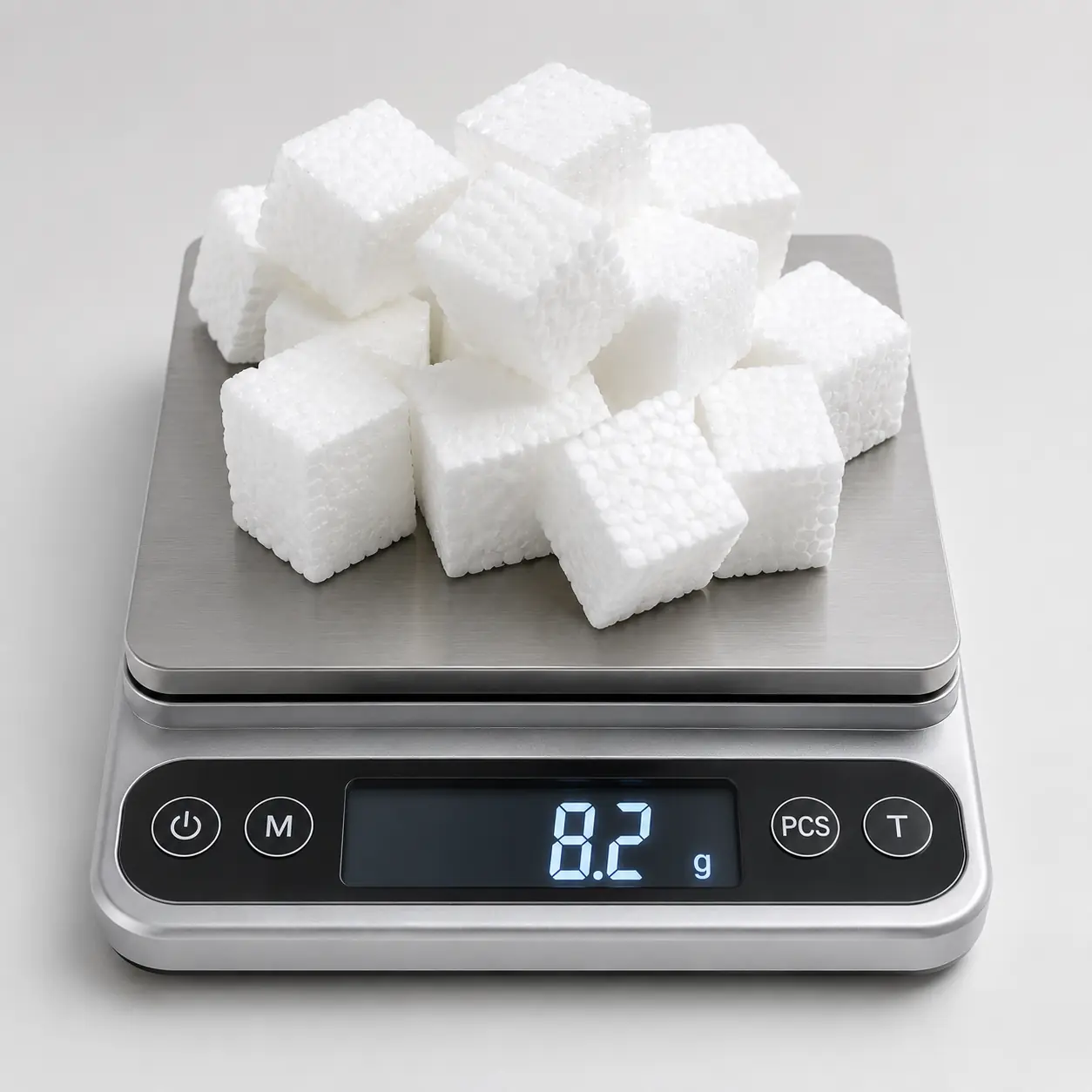
- Low weight, between 13 and 25 kg/m³ (ceramic weight = 800 kg/m³);
- Compressive strength from 1,000 to 2,000 kg/m²;
- Enables wide spans and high slab load capacities;
- Lower transportation costs;
- Easy handling, reducing slab assembly time by 50%;
- Enables wider beam spacing, reducing steel and concrete consumption;
- Eliminates material replacement caused by broken ceramic blocks;
- Prevents cement slurry loss and improves slab curing;
- Improves slab insulation by 70%.
Finishing
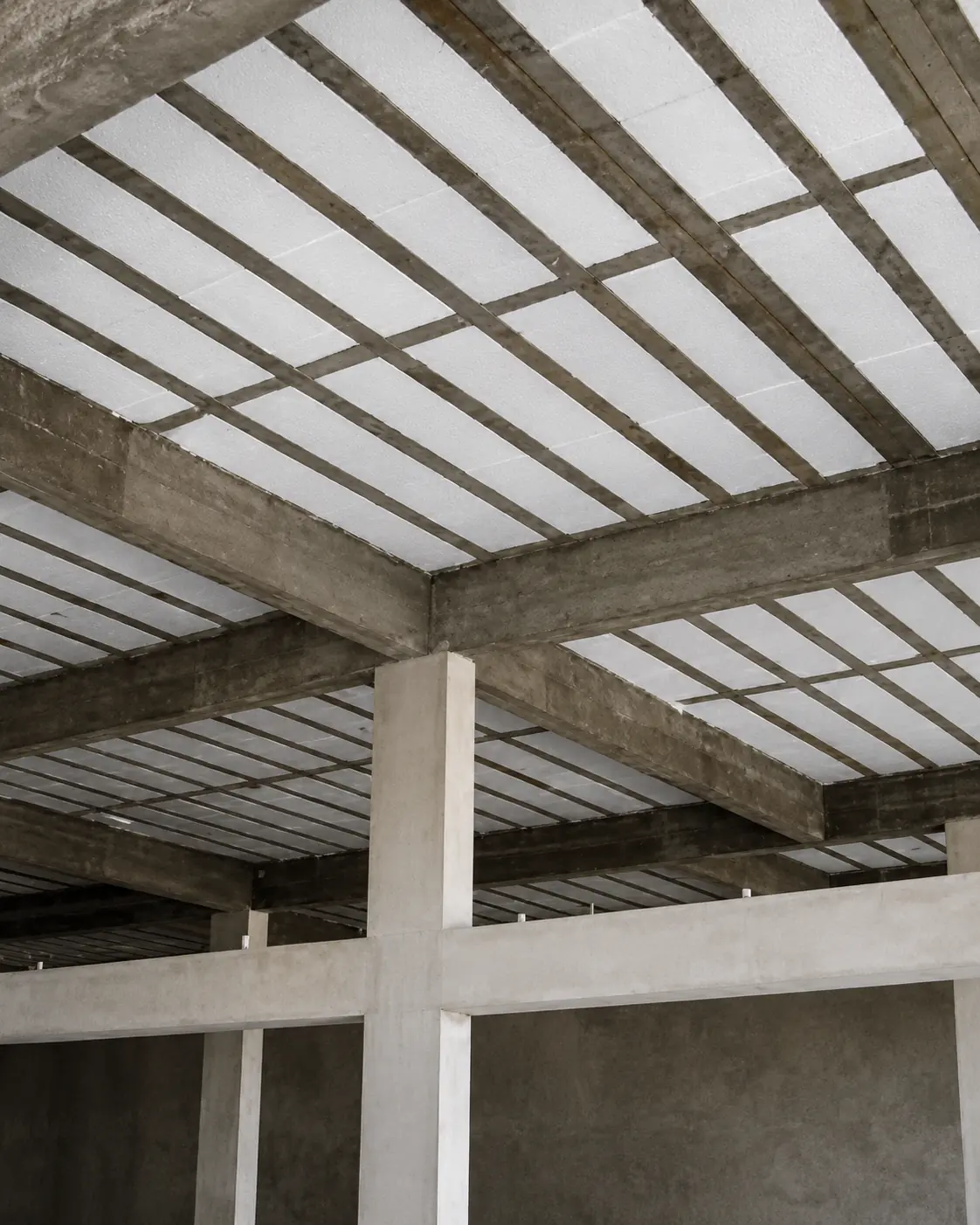
The underside of an EPS slab can be finished with a single coat of plaster or with a bonding coat followed by cement-and-sand mortar, according to the manufacturer’s specifications.
Over the last 35 years, this material has earned a stable position in construction not only because of its insulating properties, but also because it is lightweight, strong, easy to handle, and cost-effective. EPS is used in many construction applications, including lightweight concrete and the thermal and acoustic insulation of partitions, raised floors, roofs, and expansion joints. One of its most advantageous uses is as infill for linear or two-way precast slabs. This solution considerably reduces dead load compared with traditional techniques and makes it possible to design slabs as shallow as 10 cm.
We are ready to help you achieve greater savings on your project.
Contact our team and find the ideal EPS solution for your project’s needs.
Contact Isoplac